
What is Contract Lifecycle Management (CLM)?
5/8/20242 min read
Introduction
In today’s fast-paced business environment, contracts are the backbone of every organization. From vendor agreements and employee contracts to partnerships and compliance documents, businesses rely heavily on contracts to operate efficiently. However, managing these contracts manually or through disconnected systems often leads to inefficiencies, risks, and missed opportunities.
This is where Contract Lifecycle Management (CLM) comes into play.
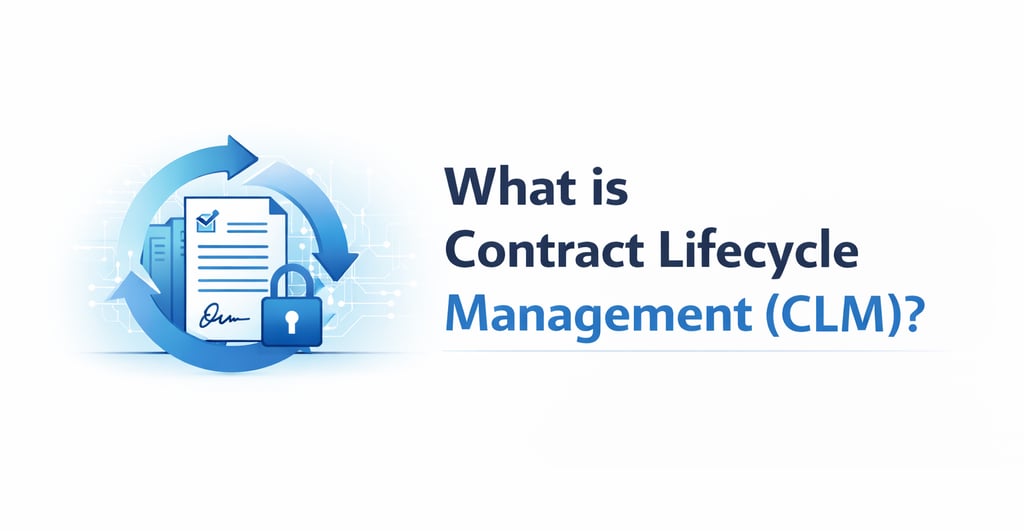
CLM is a structured, technology-driven approach to managing contracts throughout their entire lifecycle—from creation and negotiation to execution, monitoring, renewal, and termination.
Understanding Contract Lifecycle Management
Contract Lifecycle Management refers to the end-to-end process of managing contracts in a centralized, systematic, and automated manner. It ensures that every stage of a contract is tracked, controlled, and optimized.
The lifecycle typically includes:
1. Contract Creation
Contracts are drafted using predefined templates and clause libraries. This ensures consistency, reduces legal risks, and speeds up drafting.
2. Negotiation & Collaboration
Stakeholders collaborate on contract terms, suggest changes, and finalize clauses. Version control becomes critical at this stage.
3. Approval Workflow
Contracts go through multi-level approvals involving legal, finance, and business teams. Automated workflows help streamline this process.
4. Execution
Contracts are signed (digitally or physically) and become legally binding documents.
5. Storage & Repository
Executed contracts are stored in a centralized repository for easy access and retrieval.
6. Obligation Management
Organizations track key deliverables, milestones, and responsibilities defined in the contract.
7. Renewal & Expiry Management
Automated alerts ensure that renewals, renegotiations, or terminations are handled proactively.
Why Traditional Contract Management Fails
Many organizations still rely on manual or fragmented systems such as emails, spreadsheets, and shared drives. This leads to:
Lack of visibility across contracts
Version confusion and duplication
Missed deadlines and obligations
Increased legal and compliance risks
Time-consuming manual processes
Without a structured system, contracts become liabilities instead of strategic assets.
Key Benefits of CLM
1. Improved Efficiency
Automation reduces manual effort, speeds up contract cycles, and eliminates bottlenecks.
2. Enhanced Visibility
A centralized repository provides real-time access to all contracts and their status.
3. Risk Reduction
Standardized templates and approval workflows minimize legal and compliance risks.
4. Better Compliance
Organizations can ensure adherence to regulatory requirements and internal policies.
5. Cost Savings
Reduced delays, fewer errors, and optimized processes lead to significant cost benefits.
Role of Technology in CLM
Modern CLM platforms leverage advanced technologies to enhance contract management:
Automation for workflows and approvals
AI for contract analysis and insights
Blockchain for data integrity and audit trails
Cloud for accessibility and scalability
These technologies transform CLM from a manual process into a strategic function.
CLM as a Strategic Business Tool
Contract Lifecycle Management is no longer just a legal function—it is a business enabler. It helps organizations:
Make faster decisions
Improve vendor and customer relationships
Gain insights into contract performance
Align contracts with business goals
Conclusion
Contract Lifecycle Management is essential for organizations looking to scale efficiently, reduce risks, and improve governance. By adopting a modern CLM platform, businesses can transform contracts into valuable digital assets.
Contact
Reach out anytime for support or inquiries
Phone
contactus@pactinex.com
+91 9922113707
© 2026. Ethinex Consulting Private Limited All rights reserved.